
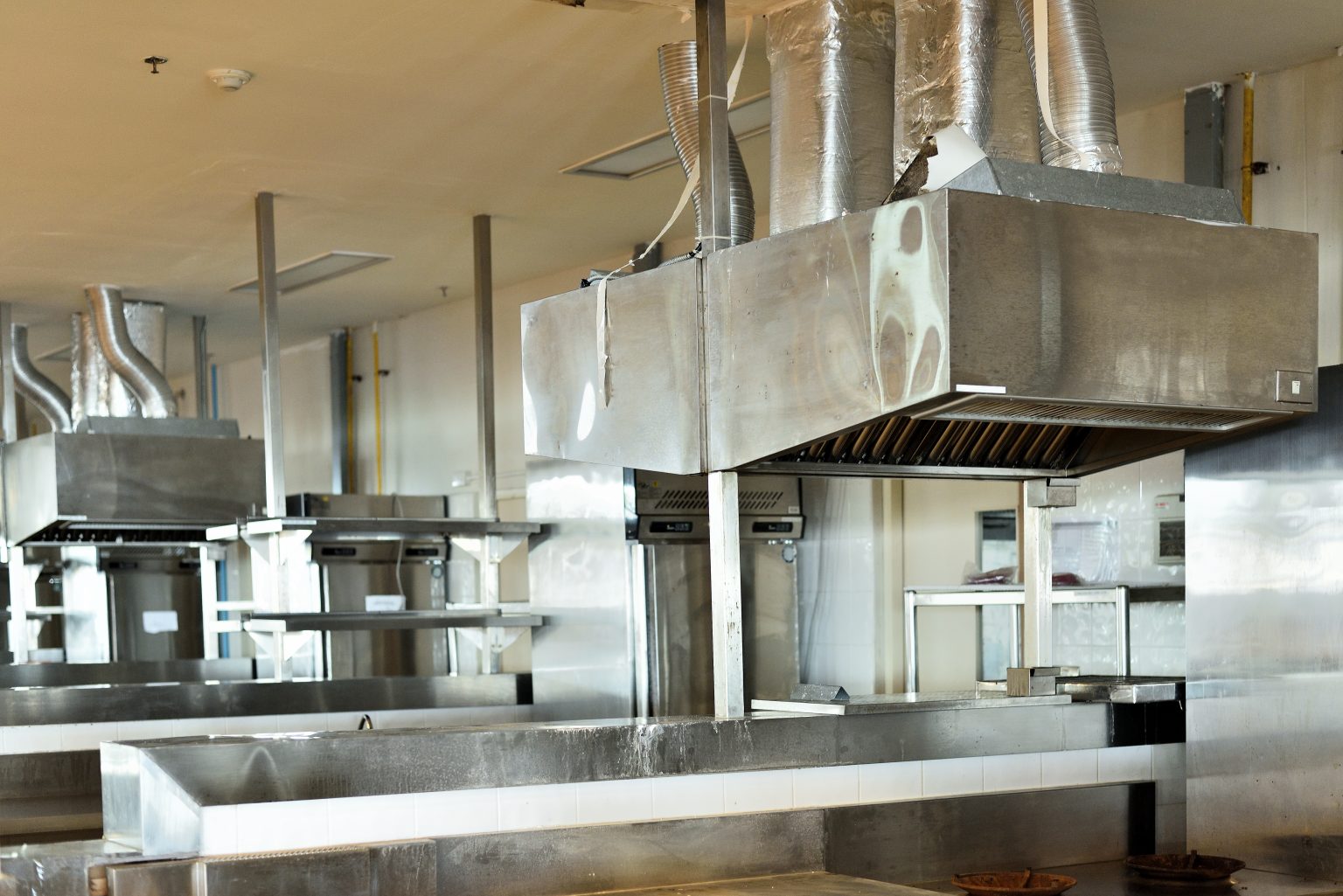
This guide has been prepared to assist building owners and tenants in New South Wales who operate commercial kitchens. It reflects the current understanding of Lotus Commercial with respect to the application of AS 1851-2012: Routine Service of Fire Protection Systems and Equipment and the AIRAH Best Practice Guide for Commercial Kitchen Exhaust Maintenance.
It is provided for general information only and does not constitute legal advice. Readers should obtain their own independent legal advice to confirm their specific responsibilities and obligations.
What is Changing in 2026?
NSW has passed regulations (Environmental Planning and Assessment (Development Certification and Fire Safety) Amendment Regulation 2025) that require building owners (other than single dwellings) to maintain their fire safety measures in line with AS 1851-2012 from 13 February 2026.
What AS 1851-2012 is about
AS 1851-2012 is titled “Routine Service of Fire Protection Systems and Equipment” and is focused on the inspection, testing and maintenance of fire protection systems installed to protect occupants and property such as sprinklers, alarms, suppression systems, extinguishers etc.
AS 1851 contemplates “fire safety measures” – the systems designed to protect people and property and “fire risks” – things that can make a fire worse — like grease build-up in an exhaust duct.
The exhaust canopy and ductwork are not listed in AS 1851 as “fire protection equipment” but they are a source of risk (through grease build-up) that can contribute to the fire. Accordingly, they can be included under fire safety maintenance regimes, which require all “essential safety measures” or “fire safety measures” in a building to be maintained.
Here’s the grey area where things get tricky, because the legal obligation to maintain a kitchen exhaust under AS 1851 only “switches on” if the exhaust system is treated as a prescribed fire safety installation in the building’s fire safety schedule.
So, if you are the operator of a commercial kitchen, the question you need to answer is this: Is the exhaust system treated as a prescribed fire safety installation in the building’s fire safety schedule?
- If YES – the exhaust must be maintained in accordance with AS 1851-2012
- If NO – the exhaust is free from any maintenance obligations prescribed by AS 1851-2012 but still subject to WHS and insurer expectations.
Legislative Mandate
The obligation to clean and maintain kitchen exhaust systems arises from several overlapping frameworks:
- AS 1851 Compliance – Where kitchen exhaust systems or associated fire suppression equipment are listed in the building’s fire safety schedule (in NSW) AS 1851 applies directly.
- General Fire Safety Duties – Even if not explicitly listed, building owners and commercial kitchen operators have a statutory duty of care under workplace health and safety and fire safety legislation to minimise foreseeable fire risks. Failure to maintain kitchen exhaust systems could be interpreted as a breach of this duty.
- Insurance Requirements – Insurers routinely require evidence of kitchen exhaust cleaning. Policies may exclude cover for fire losses if cleaning has not been carried out and documented to an acceptable standard (often AS 1851).
Compliance vs Best Practice
Ironically, while new legislation mandates compliance with AS 1851-2012, it is acknowledged that the standard is NOT the best practice for kitchen exhaust maintenance. AS 1851 requires time-based inspection and cleaning schedules (e.g. monthly, quarterly, six-monthly, annually) and is focussed on proving that required activities have been performed at the mandated frequency, rather than on measured risk.
In 2024, the Australian Institute of Refrigeration, Air Conditioning and Heating (AIRAH) published its Best Practice Guide (BPG) for Commercial Kitchen Exhaust Management. The BPG addresses the inadequacies and shortfalls of AS 1851-2012 in relation to kitchen exhaust maintenance and aligns with emerging standards from other jurisdictions.
The AIRAH Best Practice Guide (BPG) promotes a different philosophy. Instead of cleaning on a fixed schedule regardless of condition, it requires measurement of the rate of grease accumulation and by establishing cleaning thresholds based on accumulation thickness, cleaning frequency is adjusted according to actual cooking intensity and risk. The BPG treats exhaust cleaning as a risk management and fire prevention strategy, not just a compliance tick-box exercise.
So:
- AS 1851 says: clean and maintain on a set schedule (monthly, quarterly, six-monthly, annually etc.), regardless of how much grease is present. This establishes a time-based compliance schedule mandated in NSW from February 2026 and provides a minimum legal baseline.
- BPG says: measure grease thickness and adjust cleaning frequency to match cooking intensity (clean sooner if grease builds up fast). A risk-based framework, advocating cleaning based on measured grease accumulation thresholds. Provides superior fire risk management and insurer defensibility.
The smart approach from February 2026 is to do both – use AS 1851 to stay compliant with the law and use BPG to reduce fire risk and keep insurers happy.
A combined approach:
- Treat AS 1851 as the floor — always meet the time-based schedules and logbook requirements.
- Overlay the BPG to measure actual grease accumulation and adjust cleaning frequency upwards where risk dictates.
- Store records together (AS 1851 logbooks + BPG measurements) for a complete compliance and risk-management file.
The Insurance Angle
This is where the implications become very clear.
If there is a kitchen exhaust fire, the investigation will include an assessment of the kitchen exhaust maintenance. If this is found to be lacking, the insurers may refuse to cover the fire damage, arguing it didn’t meet policy conditions.
A feasible scenario is that the insurer might still pay third-party claims (e.g. damage to another tenant’s property) but then sue the kitchen operator or the landlord to recover costs. If both landlord and tenant are pointing fingers, insurers will pick whichever party looks easiest to blame.
What Building Owners Need to Know
As a building owner, you carry the ultimate responsibility for ensuring that prescribed fire safety measures are maintained. The first step is to check your fire safety schedule.
- If the kitchen exhaust is prescribed: From February 2026, AS 1851 compliance is mandatory. The best approach is to merge AS 1851’s time-based inspections with the BPG’s risk-based grease measurement. This dual system satisfies the law while actively reducing fire risk and strengthening your insurance position.
- If it is not prescribed: You may not be bound by AS 1851, but the risk is still real. In this case, implementing the BPG shows you are taking proactive steps to manage foreseeable fire hazards — something regulators, insurers, and tenants all expect.
Whatever the case, clear communication is essential. Owners should formally inform tenants of obligations, coordinate access for contractors, and ensure records are shared. It is also wise to engage with insurers early, confirming that the maintenance regime meets their expectations. This transparency reduces disputes and strengthens defensibility if a fire occurs.
What Tenants Need to Know
As a tenant operating a commercial kitchen, you are on the front line of risk. Even if the landlord has formal compliance duties, a fire in your kitchen will disrupt your business first — and insurers will expect to see that you took reasonable precautions.
- If the exhaust is prescribed: Maintenance must comply with AS 1851 requirements, but the smartest path is to combine this with the BPG overlay. Ensure the timing requirements are satisfied, keep your own filter-cleaning and grease-logging records, and cooperate fully to ensure the system is properly managed.
- If the exhaust is not prescribed: Don’t assume you’re free of responsibility. Insurers often refuse or limit claims if there is no evidence of cleaning. Implementing the BPG risk-based approach is the clearest way to demonstrate diligence and protect your cover.
Strong communication with both the landlord and your insurer is key. Confirm in writing who is responsible, request copies of maintenance reports, and tell your insurer how the system is managed. This joined-up approach reduces the chance of cover disputes and ensures everyone is protected.
Key Takeaways
- From 13 February 2026, building owners in NSW must maintain all prescribed fire safety measures in accordance with AS 1851-2012.
- A kitchen exhaust system only falls under AS 1851 if it is listed as a prescribed installation in the building’s fire safety schedule.
- If prescribed: Owners must comply with AS 1851. The most effective approach is to combine AS 1851’s time-based schedules with the Best Practice Guide (BPG), which uses grease measurements to align cleaning frequency with actual cooking intensity.
- If not prescribed: There is no legal obligation under AS 1851, but owners and tenants still carry duties under WHS law and insurance requirements. In this case, implementing the BPG risk-based method is the smartest way to demonstrate diligence and satisfy insurers.
- Communication is critical. Owners should formally inform tenants of responsibilities, tenants should clarify obligations in writing, and both parties should engage with insurers to confirm maintenance expectations.
- Documentation matters. Keep AS 1851 logbooks (if required) and BPG measurement records together as evidence of compliance and risk management.
- Ultimately: AS 1851 provides the legal baseline; the BPG reduces real-world fire risk. Using both — and keeping all parties aligned — is the best way to stay compliant, manage risk, and protect insurance cover.